
AATSA Keynote Speakers 2026
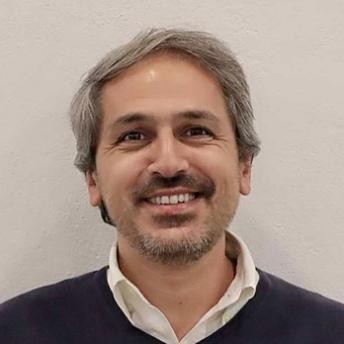
Rodolfo Oliveira, IEEE Senior Member, ACM
Member
Universidade Nova de Lisboa, Portugal
Rodolfo Oliveira is an Associate Professor with Habilitation in
Electrical and Computer Engineering at NOVA School of Science and
Technology (NOVA FCT) and a Senior Researcher at the Instituto de
Telecomunicações, in Lisbon. His work focuses on wireless and mobile
communications, stochastic modeling, and the design and performance
analysis of next-generation network architectures. He is currently
the Director of the Integrated Master in Electrical and Computers
Engineering and the Bachelor on Communications and Information
Engineering, both offered at NOVAFCT.
He has held visiting research and teaching positions at several
international institutions: at the University of Thessaly in Greece
in 2008; at Carnegie Mellon University (CMU) in the United States in
2011 and again in 2023; and at the Technical University of Berlin in
2025. Rodolfo has been actively involved in numerous research
projects funded by national and European agencies. He has supervised
more than 60 MSc and PhD students.
His research has resulted in over 200 peer-reviewed publications,
including high-impact journals and several award-winning conference
papers. He serves on the editorial boards of journals such as the
IEEE Open Journal of the Communications Society, where he was named
Exemplary Editor in 2023, is a Senior Editor of IEEE Communications
Letters, where he received the same distinction in 2021, and serves
as Editor in Ad Hoc Networks (Elsevier).
Since 2010, Rodolfo has been an active member of the IEEE Portugal
Section, first serving as an officer in the VTS Chapter, then as
Chapter Coordinator from 2018 to 2020, as Section Vice-Chair from
2020 to 2021, and as Section Chair in the period 2022-2025.
Currently, he is the Chair of the Region 8 Ad Hoc Committee on
Flagship and Portfolio Conferences.
Speech Title: The Sixth Sense of Wireless: AI-Driven
Cognitive RF Systems for Context-Aware Intelligence
Abstract:Wireless systems are evolving from passive
communication platforms into intelligent sensing and decision-making
infrastructures. This keynote introduces the concept of a “sixth
sense” of wireless, where AI-driven cognitive RF systems jointly
perform spectrum awareness, RF sensing, and contextual
interpretation to deliver context-aware intelligence. Moving beyond
traditional cognitive radio focused solely on dynamic spectrum
access, cognitive RF systems integrate software-defined radios,
machine learning, and signal analytics to perceive, learn from, and
adapt to their electromagnetic environment.
The talk presents an overview of cognitive RF architectures and
AI-enabled processing techniques that allow radios not only to
optimize spectrum use but also to extract situational and
environmental context from signals of interest and signals of
opportunity. Emphasis is placed on how joint
communication-and-sensing capabilities enable smarter, more adaptive
wireless networks and services.
Key challenges in RF intelligence are discussed, together with
emerging approaches that fuse communication and sensing functions.
The keynote concludes by outlining a vision of context-aware
wireless systems that transform RF infrastructure into an
intelligent layer capable of supporting adaptive human-aware and
environment-aware connectivity.

Marc A. Rosen, CAE Fellow, SME Fellow, Engineers Canada
Fellow, CSME Fellow, International Energy Foundation Fellow,
CSSE Fellow
Ontario Tech University, Canada
Marc A. Rosen, Ph.D., is a Professor at University of Ontario
Institute of Technology in Oshawa, Canada, where he served as
founding Dean of the Faculty of Engineering and Applied Science. Dr.
Rosen has served as President of the Engineering Institute of Canada
and of the Canadian Society for Mechanical Engineering. He has acted
in many professional capacities, such as Editor-in-Chief of various
journals, and a Director of Oshawa Power and Utilities Corporation.
With over 70 research grants and contracts and 900 technical
publications, Dr. Rosen is an active teacher and researcher in
sustainable energy, sustainability, and environmental impact. Much
of his research has been carried out for industry. Dr. Rosen has
worked for such organizations as Imatra Power Company in Finland,
Argonne National Laboratory near Chicago, the Institute for Hydrogen
Systems near Toronto, and Ryerson University in Toronto, where he
served as Chair the Department of Mechanical, Aerospace and
Industrial Engineering. Dr. Rosen has received numerous awards and
honours, and is a Fellow of numerous societies.
Speech Title:Energy sustainability: A vital route to
sustainable development and environmental protection in
transportation
Abstract:Sustainable development is an important goal for
human and societal activity. Energy sustainability is of great
importance to any activities and plans for overall sustainable
development, and thus provides a vital route to sustainable
development and environmental protection in transportation. This is
particularly important given 1) the pervasiveness of energy use
throughout almost all aspects of societies and the lives of people,
2) the importance of energy in economic development of societies and
the living standards attained by people, and 3) the significant
impacts that energy processes and systems have on the environment
and the ecosystems within them.
Many factors that need to be considered and appropriately addressed
in moving or shifting towards energy sustainability are examined in
this talk. These include appropriate selection of energy resources
bearing in mind sustainability criteria, facilitation of the use of
sustainable energy resources particularly through the use of
appropriate energy carriers, enhancement of the efficiency of
energy-related processes, and a holistic adoption of environmental
stewardship in energy activities. In addition, other key
sustainability measures are addressed, such as economics, equity,
land use, lifestyle, sociopolitical factors and population, and
examples of energy sustainability measures are described in
transportation. Conclusions are provided related both on options for
energy sustainability and on means to achieve sustainable
development and overall sustainability.

Zhengxian Liu
Harbin Institute of Technology, China
Zhengxian Liu, Associate Professor at the School of Aerospace Science
and Technology, Harbin Institute of Technology, has been selected
for the 2023 Postdoctoral Innovation Talent Support Program (Boxin
Program). He has long been committed to the basic theory of
mechanics, intelligent composite material design, space deployable
structures, aerospace applications, etc., published 19 SCI papers,
presided over 6 projects including the Young Scientists Fund of the
National Natural Science Foundation of China, and served as a member
of the Smart Composites Professional Committee of the Chinese
Mainland Federation of the International Society for Advanced
Materials and Manufacturing Engineering (SAMPE), the executive
director of the expert think tank of the New Material Development
Alliance, the member of the Composite Structure Design Special
Committee of the China Composite Materials Society, the member of
the Youth Working Committee of the China Composite Materials
Society, and so on
Speech Title: Smart polymer composites and their space
deployable structures
Abstract: Smart polymer composite materials (SMPC) exhibit
excellent properties such as ultra lightweight, intelligent
deformation, high strength, and high stiffness, and are gradually
being applied in space deployable structures. The SMPC deployable
structure we developed can achieve self-locking, self deployment,
controllable deployment dynamics (utilizing shape memory effect),
and rapid self stiffening after deployment (achieved by a wall
thickness typically five times that of thin-walled elastic composite
rods). A bending deformation theory based on shape memory composite
materials was established, and its safety design zone was
established and potential failure modes were identified. The bending
deformation theory of intelligent composite materials was
introduced, and the driving performance, shape recovery behavior,
and thermomechanical properties of the structure were systematically
studied. Finally, various space deployable structures such as shape
memory composite material deployable hinges, pod poles, and flexible
solar wings were designed. The deployable flexible solar cell system
developed in 2020 was carried by the Practice-20 satellite to
achieve in orbit deployment verification of the world's first
flexible solar cell array based on shape memory composite materials.
In 2025, the international first in orbit application of shape
memory composite material flexible solar wings was achieved.
TBA......